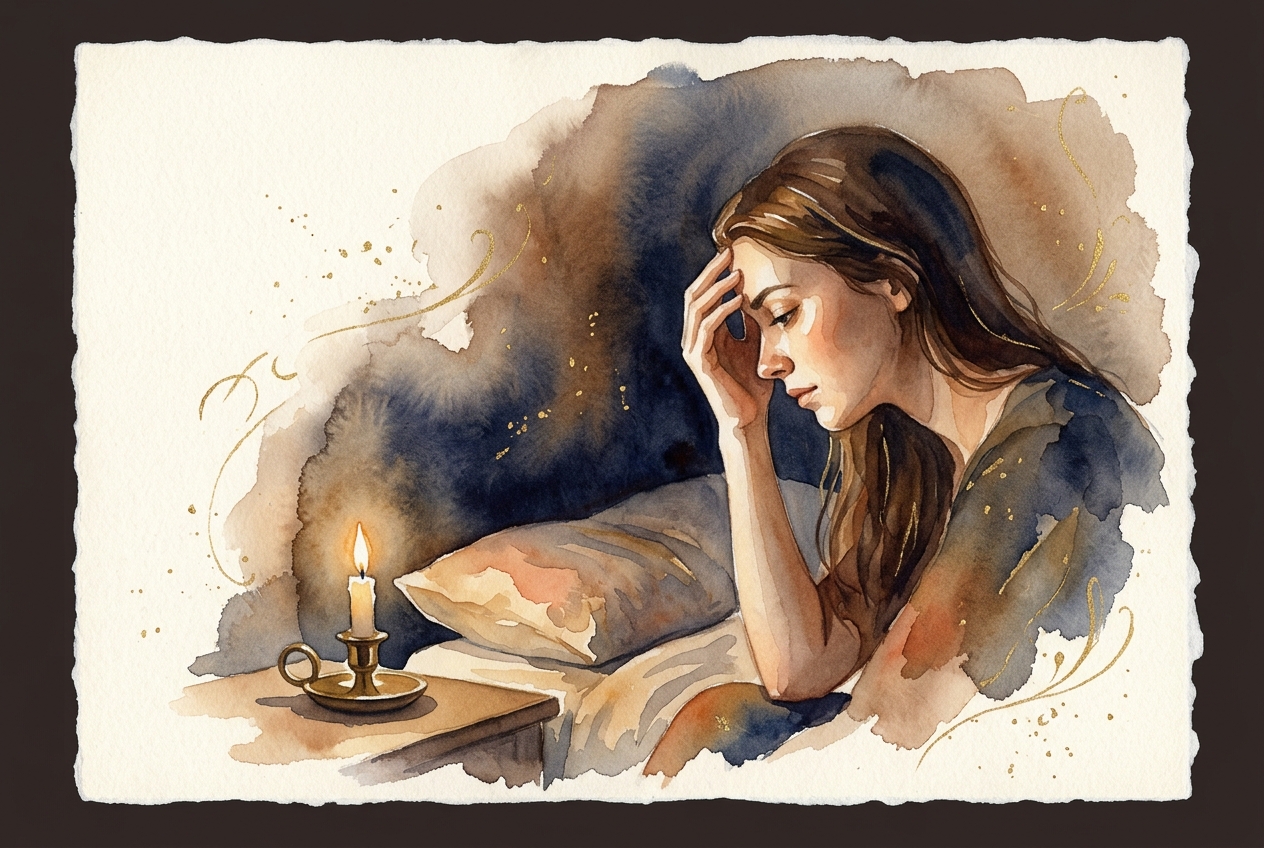
There is a season in almost every life when rest stops working.
You do all the right things. You go to bed on time. You take the walk. You drink the water. You even manage the harder ones, the boundary, the honest no, the day off the calendar. And still, something inside you does not soften.
You feel it in the morning. You feel it at the sink. You feel it in the way your shoulders will not fully drop even after a good night's sleep.
I used to be so confused by this. I had done the work of self-care. I had earned my rest. Why was I still tired in a place rest could not reach?
It took me longer than I want to admit to understand what was happening. What I finally learned is something I want to share with you gently now.
Rest and repair are not the same thing.
Rest is for what is tired
Rest is what the body needs when it has been carrying too much for too long. It restores. It refills. It puts the cup back on the shelf.
Rest is the walk. The nap. The evening you cancel. The morning you do not set an alarm. The meal you eat with your eyes closed for a moment.
Rest is real. Rest matters. Every article I have written about self-care is still true. If you are running on empty, please rest.
But rest, on its own, cannot reach the parts of you that are not just tired. It cannot reach the parts of you that are hurt.
Repair is for what is hurt
Repair is a different kind of tending. It moves more slowly than rest. It asks different questions.
Repair asks: what am I carrying that is not mine?
Repair asks: what happened, long ago, that I have been trying to outrun with productivity, with pleasing, with achievement, with even self-care itself?
Repair asks: what would it mean, actually, to feel this instead of manage it?
You cannot answer any of those questions in the twenty minutes before bed. You cannot answer them with a candle. You cannot answer them with a green juice. You cannot answer them by being kinder to yourself in the moment, though kindness matters.
You can only answer them by turning toward yourself. Slowly. On purpose. With something that resembles reverence.
The signs it is repair you need, not rest
There is no test for this. But there are patterns I have noticed in my own life, and in the honest conversations I have with people I trust.
You may be needing repair, not more rest, when:
- You have technically slept enough, but you still wake up bracing.
- Small things make you cry, or make you rage, in a way that feels bigger than the small thing.
- You feel a low, humming irritation with people you love and cannot name why.
- The self-care that used to work does not work anymore.
- You find yourself avoiding stillness, because when you are still, something surfaces.
- You keep saying once this season is over I'll finally slow down, and the season never really ends.
None of that means you are broken. All of it means something inside you is trying to be heard.
What repair actually asks of us
Repair does not require a therapist, though therapy can help. It does not require a retreat, though space can help. It does not require a diagnosis.
What repair actually requires is turning toward.
Turning toward the feeling you have been managing. Turning toward the memory that keeps arriving uninvited. Turning toward the part of you that has been overriding the no your body has been quietly saying for years.
Turning toward is a small act. It looks unremarkable. Sometimes it looks like sitting on the edge of the bed for two extra minutes before you begin the day, and letting yourself actually feel how you feel. Sometimes it looks like writing down a question you have been avoiding. Sometimes it looks like saying a hard thing out loud to yourself in the car.
None of it is dramatic. All of it is the work.
Why rest alone stops being enough
Rest fills a cup. Repair fixes the crack the cup keeps leaking through.
If you do not tend the crack, you can pour rest into the cup forever and the level will keep dropping. That is why so many people who are technically doing everything right, the sleep, the boundaries, the walks, still feel that quiet, background sense that something is not okay.
Something is not okay. Not because you have failed. Because the crack has been asking for attention, and rest is not the language it speaks.
A soft turn
I want to be careful, here, at the end of this piece.
I am not saying that self-care is not enough. Self-care is essential. If you are exhausted, rest. If you are running on fumes, please, please stop and rest. Nothing I have written above changes that.
I am only saying that there is a doorway past rest, and if you have been resting for a while and still feel that something inside you is waiting, that doorway might be for you.
Behind that doorway is not more work. It is not another to-do list.
Behind that doorway is you. The unedited version. The unmanaged version. The one who has been patient your whole life, waiting for you to have a few quiet moments to actually listen.
Rest is how you make it to that doorway.
Repair is what happens when you finally walk through it.
The two are not in competition. They are two different acts of the same self-love, done at two different depths.
If you are in a season where rest alone no longer touches what is asking to be touched, that is not a failure of self-care. That is your own soul, quietly reminding you that you are worth more than being managed.
You are worth being understood.